




What to do if you see — or are bitten — by a rattlesnake
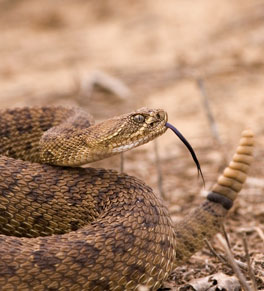
Outdoor enthusiasts lured by warmer weather to hike and bike along nature trails need to be cautious and avoid crossing paths with rattlesnakes.
Despite the recent death of a Costa Mesa mountain biker who was bitten by a rattlesnake at an Irvine nature area, bites from the venomous snakes are uncommon in Southern California. Deaths are exceedingly rare, with only five to eight reported annually across the United States.
Rattlesnake encounters typically peak in spring and summer when both humans and snakes of all varieties are most active outdoors.
Many wildlife officials are expecting to see more of the reptiles this summer because winter's heavy rains have increased the forage and number of small rodents, their prey.
Recognizing them
Rattlesnakes, the only venomous snakes native to California, are usually easy to identify by their:
- Triangular-shaped head
- Spotted body
- Distinctive tail rattle
If you steer clear of most snakes in the wild, it’s unlikely you will be bitten.
But if you or a friend are bitten by one, it’s important to know how to respond.
Keep it simple
Get to a hospital immediately, says Dr. Jeffrey Suchard, a UCI Health emergency medicine physician and medical toxicologist.
That means your best rattlesnake-bite tools are likely already with you: your car keys and a cell phone.
“There is no intervention at the scene of a venomous snakebite that is recommended,” says Suchard.
“Your goal is to get to a hospital as soon as possible to be assessed for possible antivenom treatment.”
What not to do
If you are bitten, Suchard says never:
- Cut an incision to suck out the venom. This macho treatment from old Western movies has never been effective.
- Use a snakebite kit. Commercial kits often contain a blade for making an incision, which can cause damage. The kits sometimes also include suction devices, which are ineffective at removing venom.
- Apply ice, which does nothing to treat the bite and potentially could lead to frostbite.
- Give the victim alcohol, caffeine or medication. None of these is helpful.
- Apply electric shock. This outdated and dangerous practice does not reduce the venom's toxicity and can alter the body's proteins.
What you should do
Snakebite symptoms include pain and swelling, starting at the wound site and possibly spreading. It can also lead to numbness, tingling, nausea, difficulty breathing and shock.
After a venomous bite, the victim should sit down, call an ambulance and rest, keeping the wound site below heart level.
That's an ideal scenario. More frequently, Suchard says, hikers and mountain bikers may be some distance from their car and out of cell phone range when they are bitten.
If that's the case, he recommends the following:
- Stay calm. Death by rattlesnake bite is extremely rare.
- Walk or bike out if symptoms are mild.
- Create a splint to immobilize the bitten appendage if the bite is more severe.
- Lightly wrap the wound with gauze, regardless of severity.
- Call 911 as soon as cell service is available.
You can either request an ambulance ride from the trailhead or, in dire situations, medical evacuation. In the most favorable circumstances, you may want to get directions to the nearest medical facility offering antivenom treatment.
Snakebite treatment
Once at the hospital, you will be assessed for antivenom treatment. This is based on the severity of your outward symptoms and the results of one or more blood tests.
Snakebite symptoms can take quite a while to manifest, so you will likely be observed and retested for four to six hours, possibly more. Severe bites may require several days of hospitalization to ensure you have received sufficient antivenom treatment.
What if you are bitten by a nonvenomous snake? Treat it in the field like any puncture wound: Clean the bite area and apply a loose bandage.
Should you ID the snake species?
Southern California is home to a half-dozen rattlesnake species, including the Southern Pacific, the Western, the Southwestern speckled, and the red and Western diamondbacks. They are part of the pit viper family.
The same antivenom works for all of them so do not attempt to kill or trap the snake for identification purposes, doctors and wildlife officials say. There is no need.
Suchard and his colleagues still recall the time a well-intentioned bite victim brought a live rattlesnake inside a plastic container into the UCI Health — Orange emergency room. The reptile’s presence created only danger, not help.
Preventing a bite
Of course, the best snakebite advice is to avoid getting bit in the first place.
This means staying alert to your surroundings and keeping a safe distance from a rattlesnake if you spot one. When exploring trails or rural landscapes, it’s best to wear sturdy shoes, ideally ones that cover the ankles, and long, loose-fitting pants.
Most important, never taunt a rattlesnake. National statistics indicate that more than 50% of people bitten by rattlesnakes each year are males between the ages of 17 and 27, usually due to attempts to interact with the serpent.
The telltale sign of a snake provoker is someone who has been bitten in the face or arms, Suchard says.
Don’t be that someone.