



Staying safe around summer fireworks
Summer is a season of hot weather, family gatherings and celebrations. It’s also the time of year when fireworks grab the attention of adults and children alike, sometimes with tragic consequences that include limb loss or death.
Every year, more than 14,000 people are treated for fireworks injuries, according to the Consumer Product Safety Commission. More than 50% of fireworks injuries affect people under the age of 20. Many of those injuries occur not from the initial lighting of fireworks, but from what happens afterward.
“During the summer, we see an increase in fireworks-related burns in adults and children because they approach, handle or attempt to relight a firework,” says Dr. Syed F. Saquib, a trauma surgeon and medical director of the UCI Health Regional Burn Center, the only center in Orange County verified by the American Burn Association for adult and pediatric care.
“It’s important that adults and kids alike understand that fireworks that look like a dud remain live, unstable and extremely dangerous. It’s not safe to pick them up.”
The Regional Burn Center provides treatment for all types of burn injuries, including flames, scalding, contact, hot pavement, electrical, chemical and friction burns. Last year, the burn center admitted 391 adults and 287 children, making 2025 one of the busiest on record. The team also treated hundreds of outpatients, including nearly 1,600 adults and almost 500 children.
Of those 2025 burn patients, 19 were treated for fireworks-related injuries, with nine suffering damage to the eyes and face.
Saquib addresses some common questions about firework safety.
How can I keep my family safe from a firework injury?
“The best thing you can do to keep your family safe from fireworks injuries is to leave the show to the professionals,” he advises. Adults and kids should stay a safe distance away, behind protective barriers, if possible.
What are the best firework alternatives?
Confetti poppers, bubbles or color streamers are among several safe and fun alternatives to fireworks that are great for all ages.
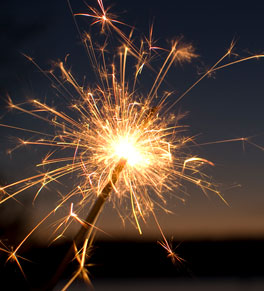
While sparklers are often perceived as “safe,” when lighted, they can heat to over 2,000 degrees Fahrenheit, which is hotter than a blow torch.
“Children should never handle sparklers or fireworks, even if they seem safe. Accidents can happen,” Saquib says.
What should I do if I find an abandoned firework in the street or sidewalk?
Saquib's rule of thumb: “If it didn’t explode, don’t pick it up.” That applies to legal and illegal fireworks.
If you see an abandoned firework, contact local authorities to safely dispose of it.
What should I do if a firework doesn’t ignite?
Fireworks that don't ignite can still be dangerous, Never relight a spent or failed firework, he says. Attempting to do so dramatically increases the risk of sudden, unexpected detonation at close range, leading to injury.
The safest response is to wait at least 20 minutes before approaching the dud firework. When it’s safe, soak the firework in a bucket of water to neutralize it, then dispose of it properly in an outdoor trash receptacle.
What are some other top firework don’ts?
According to Saquib, top firework taboos include:
- Never allow children to handle fireworks, including sparklers
- Never point or throw lighted fireworks at anyone
- Never hold lighted fireworks in your hand
- Don’t consume alcohol or drugs when lighting fireworks
- Don’t forget you can be held legally and financially liable for injuries caused by using fireworks
What if someone is burned by a firework?
“The first thing you should do is run the burn under cool, not cold, water," Saquib says. "This helps to stop the burning process.”
Remove all clothing and jewelry from the injured area, then cover the area with a dry, clean sheet or loose bandages. Next, seek immediate medical attention at the closest emergency room.
About the UCI Health Regional Burn Center
The UCI Health Regional Burn Center, located at UCI Health ― Orange, is nationally recognized for its innovative care programs, robust research, successful outcomes after severe burn injury and commitment to patients recovering from such injuries. It is also accredited by the American Burn Association for both adults and pediatric patients.
The team also cares for severe skin conditions, complex wounds and scar management. Plus, the program partners with leading clinical and scientific innovators on campus to provide the patients the most up-to-date treatments, such as laser therapy for burn scar management. A range of psychosocial programs aid survivors in their mental recovery from their injuries.
The UCI Health Regional Burn Center is also at the forefront of leading-edge therapies, such as using 3D printers to build prosthetics for patients to aid in their recovery and rehabilitation.
It also engages in clinical outcomes research with projects presented at national conferences and subsequently published in peer-reviewed journals.