




Normal forgetfulness vs. dementia: How to tell the difference
UCI Health neurologist offers guidance on when to see a physician
IN THE NEWS: How do you know when forgetfulness is normal and when it’s a cause for concern?
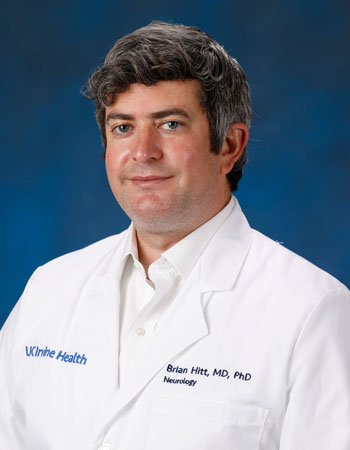
 Dr. Brian D. Hitt, a board-certified behavioral neurologist at UCI Health who specializes in the diagnosis and management of cognitive and memory disorders, recently spoke with Parade about distinguishing the two.
Occasional forgetfulness associated with aging differs from memory changes that may signal a neurological condition.
According to Hitt, it’s normal for memory to start declining when we’re in our 30s.
“Occasional forgetfulness becomes more common with age, mainly because the brain’s processing speed peaks sometime around our 30s and declines slowly from there.”
People may forget where they left their keys or the name of the movie they recently saw. Or, Hitt says, they may have trouble doing two things at once, like having a conversation while driving That’s because the brain’s processing speed is slower, leaving less room for divided attention.
“We need to focus on one thing at a time; otherwise, we can get distracted and lose our train of thought.”
What’s more concerning is forgetting a conversation entirely. It’s alarming if you pay close attention while having a conversation then, afterward, forget what the conversation was about.
Hitt notes that others often notice your memory problems first. They may point out that you seem confused or have repeated yourself.
This doesn’t automatically mean a diagnosis of dementia. There may be other explanations. But it’s important to see a doctor about lingering changes in memory. The earlier a memory problem is detected, the more treatable it may be.
Hitt is a board-certified UCI Health behavioral neurologist who specializes in the diagnosis and management of Alzheimer's disease and other cognitive and memory disorders. He has conducted extensive basic research into the cellular and molecular mechanisms of Alzheimer's and related neurodegenerative diseases.
He is an assistant professor in the Department of Neurology at the UC Irvine School of Medicine.
To make an appointment with the UCI Health Memory Disorders Program, call 714-456-7720.
About UCI Health
UCI Health is one of California’s largest academic health systems and the clinical enterprise of the University of California, Irvine. Established on July 1, 1976, UCI Health has grown into a 1,513-bed health system that includes UCI Health — Orange, UCI Health — Irvine, its newest facility, UCI Health — Irvine Rehabilitation Hospital, four Community Network hospitals and a growing network of ambulatory care centers across Orange and Los Angeles counties. As Orange County’s only academic health system, UCI Health is home to the only National Cancer Institute-designated comprehensive cancer center based in the county, the region’s only American College of Surgeons-verified Level I adult and Level II pediatric trauma center, American College of Emergency Physicians Gold Level 1 Geriatric Emergency Department and a nationally recognized regional burn center verified by the American Burn Association. Powered by UC Irvine, UCI Health serves 5.6 million people across Orange County, western Riverside County and southeast Los Angeles County through excellence in patient care, research and medical education. Follow UCI Health on Facebook, Instagram, LinkedIn and X.