




Tapping AI to boost cancer detection and treatment
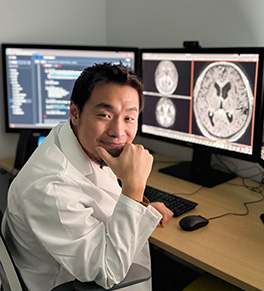
At the Chao Family Comprehensive Cancer Center, researchers are harnessing machine-learning techniques that are transforming how we detect and treat tumors of the brain, gut and other body systems.
They are developing artificial intelligence (AI) algorithms that seamlessly integrate with existing imaging systems to analyze thousands of MRI images, providing cancer specialists with clear views of tumors that otherwise would go undetected.
Leveraging data from the UCI Health Comprehensive Brain Tumor Program’s vast patient community, researchers with the university’s Center for Applied Artificial Intelligence Research have developed an AI tool that acts as a second set of expert eyes to find the tiniest of tumors.
It can quantify the total tumor burden, help develop precision treatment plans and track a patient’s progress with unprecedented accuracy.
Earlier detection saves lives
“In one case, the AI algorithm successfully identified a tiny, aggressive tumor — no larger than a grain of rice — that was missed by human review,” said UCI Health neuroradiologist Peter D. Chang, founding director of the AI research center.
“This early detection allowed for swift, targeted therapy that successfully treated the lesion and significantly extended the patient’s life."
For another patient with dozens of brain tumors, Chang said the AI tool generated a fully automated, comprehensive radiation therapy plan to target each lesion with pinpoint accuracy while sparing healthy tissue, a task typically requiring hours of painstaking manual work that was completed in just minutes.
The future of cancer care
Chang and his team are also working with UCI Health surgical oncologist Dr. Maheswari Senthil on a prospective clinical trial using AI to improve gastric cancer detection.
“This is the future of cancer care — proactive, personalized and profoundly more effective,” said Chang, who was recently named director of the university’s Institute for Precision Health.
“It is a testament to the innovation happening right here at UC Irvine, where we are turning groundbreaking research into renewed hope for patients and their loved ones.”