




Driving safely with Parkinson’s disease
UCI Health neurologist shares warning signs that warrant evaluation
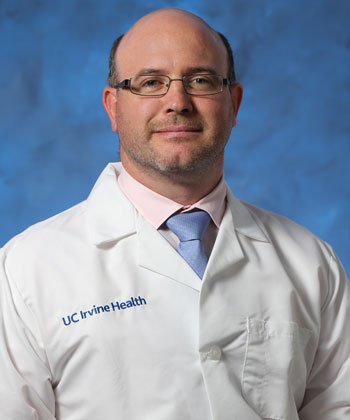
IN THE NEWS: The ability to drive a car is a hallmark of independence.
 When one has a degenerative movement disorder like Parkinson’s disease, it’s important to remain alert to any changes or difficulties with driving, UCI Health neurologist Dr. Nicolás M. Phielipp tells Everyday Health.
“Most people will do well for many years, as long as we address their symptoms. Sometimes it’s hard to realize when things have changed.”
Some changes Phielipp says those with Parkinson’s and their loved ones should watch out for include:
- Trouble turning the head
- Forgetting to check mirrors
- Feeling anxious, angry or stressed behind the wheel
- Slower reaction times
- Visual-spatial issues, such as hallucinations
Family and friends expressing concern is also a sign to get an evaluation.
Phielipp advises driving when medication is working best and avoiding it if you're drowsy.
Phielipp is a fellowship-trained neurologist who specializes in the care and treatment of patients with Parkinson’s disease, dystonias, tremor, Huntington’s disease and other movement disorders. He sees patients at UCI Health Parkinson's and Movement Disorders Program.
Phielipp's research interests include the management of Parkinson's disease and task-specific dystonias, such as writer's cramp and musician's, golfer's or tennis player's dystonia. He also is interested in developing techniques to better diagnose Parkinson's disease, understanding the mechanisms involved in deep brain stimulation, and improving the diagnosis and management of movement disorders in general.
He also has participated in several research projects involving transcranial magnetic stimulation for the treatment of mood and motor symptoms of Parkinson's disease.
To make an appointment, call 714-456-7720.
About UCI Health
UCI Health is one of California’s largest academic health systems and the clinical enterprise of the University of California, Irvine. Established on July 1, 1976, UCI Health has grown into a 1,513-bed health system that includes UCI Health — Orange, UCI Health — Irvine, its newest facility, UCI Health — Irvine Rehabilitation Hospital, four Community Network hospitals and a growing network of ambulatory care centers across Orange and Los Angeles counties. As Orange County’s only academic health system, UCI Health is home to the only National Cancer Institute-designated comprehensive cancer center based in the county, the region’s only American College of Surgeons-verified Level I adult and Level II pediatric trauma center, American College of Emergency Physicians Gold Level 1 Geriatric Emergency Department and a nationally recognized regional burn center verified by the American Burn Association. Powered by UC Irvine, UCI Health serves 5.6 million people across Orange County, western Riverside County and southeast Los Angeles County through excellence in patient care, research and medical education. Follow UCI Health on Facebook, Instagram, LinkedIn and X.