




First patient receives neural stem cell therapy in groundbreaking Huntington’s disease clinical trial
World’s first neural stem cell clinical trial for condition leverages innovative technology
UCI Health, the clinical enterprise of the University of California, Irvine, has opened the world’s first in-human embryonic stem cell-derived clinical trial for Huntington’s disease.
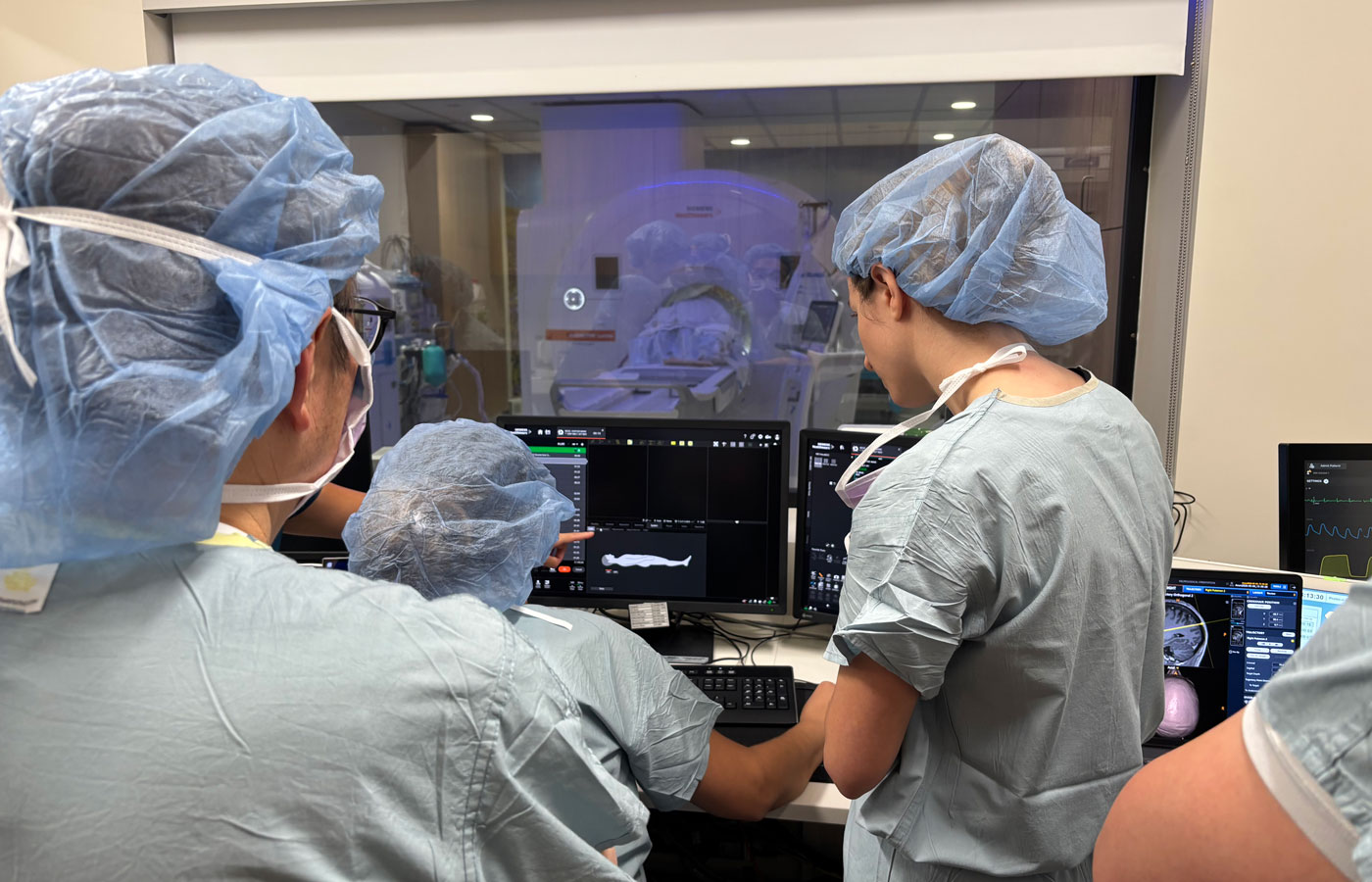
The phase 1b/2a REGEN4HD clinical trial will evaluate the safety of hNSC-01 neural stem cells that are derived from embryonic stem cells and precisely delivered to the brain with a specialized neurological mapping and targeting stereotactic system and performed in an MRI suite.
The trial is the result of many years of basic and translational science at the UC Irvine Sue & Bill Gross Stem Cell Research Center (SCRC) with funding by the California Institute of Regenerative Medicine (CIRM). The research team is led by Leslie M. Thompson, PhD, SCRC co-director and Donald Bren Professor of neurobiology and behavior as well as psychiatry and human behavior.
“This clinical trial highlights the important role that an interdisciplinary academic and clinical team together with the Huntington’s disease families, plays in advancing medicine,” said Thompson, sponsor of the clinical trial at the CIRM-funded UC Irvine Alpha Clinic.
“In addition to CIRM, these advances are possible because of the broader Huntington’s disease research community supported by federal and foundation funding. We are so grateful to our patients and their incredible families for their bravery to provide hope for others with very few options.”
The first patient received the intervention at UCI Health — Irvine, home to Orange County’s first adult bone marrow/stem cell transplant and cellular therapy program, in May. UCI Health neurosurgeon Dr. Jefferson W. Chen, assisted by a team including a neurosurgery fellow, delivered the intervention. A second patient is scheduled to receive the intervention in July.
“The first patient intervention went very well. To date, they haven’t reported any serious adverse events,” said UCI Health neurologist Dr. Ravi Rajmohan, the clinical trial’s principal investigator. “This trial may help us move one step closer to a future with available treatments that could potentially slow the progression of Huntington’s disease.”
Huntington’s disease is a fatal, progressive genetic disorder that gradually destroys brain cells. It usually begins between the ages of 35 and 50, worsening over 10 to 20 years. Symptoms include involuntary movements, difficulty thinking and planning daily tasks, and mood changes such as depression. If successful, this therapy could prolong independent living and significantly reduce long-term care costs, easing the strain on families.
What intervention is being tested?
The therapy is called hNSC-01. It uses pluripotent neural stem cells derived from embryonic stem cells, which were manufactured through the UC Davis GMP facility, and have been shown in animal studies to:
- Protect existing brain cells
- Replace lost cells
- Rebuild impaired brain circuits
- Release helpful proteins, such as brain-derived neurotrophic factor (BDNF)
- Reduce harmful protein accumulations that damage brain cells
The stem cells were also shown to be safe over long periods in mice.
How is the intervention delivered?
The stem cells are implanted during a roughly six-hour surgical procedure done under general anesthesia. While lying face down in an MRI scanner, the patient receives stem cells implanted directly into the striatum deep in the brain, using a purchased proprietary therapy-enabling platform for navigation and delivery. Damage to the striatum, which is responsible for motor control, decision-making, motivation and more, causes Huntington’s disease symptoms.
Subjects will be closely monitored for safety as well as preliminary signs of potential benefit.
How is the clinical trial funded?
The clinical trial is made possible by a $12 million grant from CIRM, and the trial is coordinated through the UC Irvine Alpha Clinic. It is one of nine CIRM clinical research centers in the state and is the clinical arm of UC Irvine Sue & Bill Gross Stem Cell Research Center.
How many people will the trial enroll?
The clinical trial will enroll 21 people ages 18 to 65 with early-stage Huntington’s disease. Twelve participants will be enrolled into a phase 1b dose-escalation group and nine in a phase 2a expansion group.
How does Huntington’s disease impact patients and families?
As a disease that often progresses over decades, Huntington’s places a huge financial and emotional burden on patients, families and caregivers. In California alone, healthcare costs for Huntington’s patients can range from $3 million to $25 million annually.
About UCI Health
UCI Health is one of California’s largest academic health systems and the clinical enterprise of the University of California, Irvine. Established on July 1, 1976, UCI Health has grown into a 1,513-bed health system that includes UCI Health — Orange, UCI Health — Irvine, its newest facility, UCI Health — Irvine Rehabilitation Hospital, four Community Network hospitals and a growing network of ambulatory care centers across Orange and Los Angeles counties. As Orange County’s only academic health system, UCI Health is home to the only National Cancer Institute-designated comprehensive cancer center based in the county, the region’s only American College of Surgeons-verified Level I adult and Level II pediatric trauma center, American College of Emergency Physicians Gold Level 1 Geriatric Emergency Department and a nationally recognized regional burn center verified by the American Burn Association. Powered by UC Irvine, UCI Health serves 5.6 million people across Orange County, western Riverside County and southeast Los Angeles County through excellence in patient care, research and medical education. Follow UCI Health on Facebook, Instagram, LinkedIn and X.