




Confronting global gaps in integrative cancer care knowledge
UC Irvine-led survey reveals factors that limit use of complementary therapies like acupuncture, yoga
Orange, Calif. — More than eight in 10 cancer care providers worldwide say they don’t know enough about integrative oncology to confidently recommend it to patients. That finding, from a global survey led by researchers at the University of California, Irvine, helps explain why yoga, acupuncture, mindfulness training and other evidence-based complementary therapies remain underused in cancer care, even as demand from patients keeps climbing.
The study, published in Supportive Care in Cancer, surveyed 282 members of two international professional societies: the Multinational Association of Supportive Care in Cancer and the Society for Integrative Oncology. Respondents spanned more than a dozen world regions and included physicians, nurses, pharmacists, psychologists and complementary-therapy practitioners. The goal was simple: pin down, in hard numbers, what’s standing between cancer patients and the supportive therapies that could ease their treatment.
Patient desire, provider hesitation
Integrative oncology blends standard cancer treatment with complementary approaches — nutrition counseling, acupuncture, yoga, aromatherapy and mind-body practices — aimed at easing symptoms and improving quality of life during and after treatment. Prior research has shown that most oncologists already recommend at least one such therapy. But recommendations are inconsistent, and many patients never hear about their options at all. One earlier study found that only 15% of patients recalled a provider even raising the subject.
The researchers, who are leaders of the two international professional societies, set out to categorize why. They sorted 27 potential obstacles into four buckets — knowledge, finances, logistics and individual attitudes — and asked providers how strongly they agreed each one got in the way of integrative oncology recommendations.
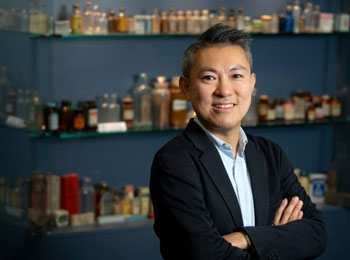
“The good news here is that this isn’t a mystery we can’t solve. Providers want to help their patients access these therapies – they just haven’t had the training, the referral pathways or the confidence to do it well. That’s a fixable problem,” says Alexandre Chan, professor of clinical pharmacy in the UC Irvine School of Pharmacy & Pharmaceutical Sciences, president of the Multinational Association of Supportive Care in Cancer and the study’s corresponding author.
Knowledge emerged as the biggest barrier
Every single knowledge-related barrier drew majority agreement. More than 80% of respondents said that a lack of provider experience and training holds back integrative oncology in their own practices, and three-quarters said that providers simply aren’t aware of what integrative oncology even encompasses.
Chan and his co-authors frame this as a solvable problem rather than an intractable one. Their paper argues that continuing education requirements, mentorship pairing experienced integrative practitioners with newcomers and searchable resource libraries built into electronic health records could close much of the gap within existing health systems without waiting for new legislation or funding streams.
The survey also turned up a geographic wrinkle: Providers in Europe were more than twice as likely as those in North America to cite provider knowledge as a barrier, a regional difference the authors say deserves closer study.
Money, logistics add to problem
Financial worries followed close behind. Roughly 80% of respondents pointed to a lack of insurance coverage and out-of-pocket costs as obstacles, and 88% said they believe their patients simply can’t afford complementary therapies. Because integrative oncology research is still relatively young, insurers have little basis for reimbursement, leaving patients to cover costs themselves.
Logistics added another layer: Eight of 13 system-level barriers received majority acknowledgment, from the absence of referral pathways to a lack of time and interdisciplinary coordination. Notably, providers who identified as integrative-medicine specialists were more than three times as likely as general physicians to worry that recommending complementary care might delay a patient’s conventional treatment. This is a perception the researchers say reflects a communication gap between specialties as much as any real clinical risk.
Why it matters
Cancer treatment already asks a lot of patients physically, emotionally and financially. Integrative oncology exists to make that burden more bearable. A growing body of evidence backs its use for pain, fatigue, anxiety and other side effects. But if providers don’t feel equipped to bring it up, or don’t know how to get a patient connected to it, the therapies with the most potential to help often never reach the people who need them.
The authors are careful to note the study’s limits: It captured insights from providers already engaged enough in the field to belong to a supportive-care or integrative-medicine society, and response rates were modest. Even so, it’s the first study to quantify these barriers at an international scale and gives hospitals, medical schools and professional societies a concrete list of fixes rather than a vague sense that “more needs to be done.”
About UCI Health
UCI Health is one of California’s largest academic health systems and the clinical enterprise of the University of California, Irvine. Established on July 1, 1976, UCI Health has grown into a 1,513-bed health system that includes UCI Health — Orange, UCI Health — Irvine, its newest facility, UCI Health — Irvine Rehabilitation Hospital, four Community Network hospitals and a growing network of ambulatory care centers across Orange and Los Angeles counties. As Orange County’s only academic health system, UCI Health is home to the only National Cancer Institute-designated comprehensive cancer center based in the county, the region’s only American College of Surgeons-verified Level I adult and Level II pediatric trauma center, American College of Emergency Physicians Gold Level 1 Geriatric Emergency Department and a nationally recognized regional burn center verified by the American Burn Association. Powered by UC Irvine, UCI Health serves 5.6 million people across Orange County, western Riverside County and southeast Los Angeles County through excellence in patient care, research and medical education. Follow UCI Health on Facebook, Instagram, LinkedIn and X.