




UCI Health Family Health Centers: nearly 50 years of bridging the gap
From whole-person primary care to help navigating a complex system, centers are a safety net for OC’s most vulnerable
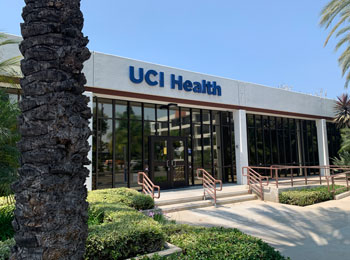
For nearly 50 years, the UCI Health Family Health Centers in Anaheim and Santa Ana have bridged the gap between vulnerable communities and the advanced care offered by nationally renowned physicians at UCI Health.
They serve the many communities of Orange County that fall under the federal poverty level, where a high percentage of the population lives with chronic conditions such as diabetes and experience barriers to accessing care, such as transportation, work schedules, navigating insurance and cultural factors.
 The UCI Health Family Health Centers are structured to mitigate the impact of those barriers with culturally appropriate prevention and education on strategies to improve their health, including cooking and physical activity.
“A huge part of my role is providing patient education,” says Dr. Shane Jones, a family medicine specialist at the center.
“I also serve as an advocate for patients in our communities. I take the time to understand the culture and where they’re coming from. That helps me earn their trust.”
Giving know-how and access
Many of the center’s patients have little to no health insurance or receive coverage through Medi-Cal. Through personalized education, the center’s team assists patients with coverage enrollment, accessing community resources and understanding their benefits.
“I help give my patients the know-how and access to the resources they need to take responsibility for own health,” Jones says.
Nearly five decades of service
UCI Health Family Health Center — Anaheim opened its doors in 1979 and UCI Health Family Health Center — Santa Ana followed in 1980.
By 1985, they were established as federally qualified health centers (FQHCs) by the Health Resources and Services Administration (HRSA) after meeting specific criteria, including implementing a patient-majority governing board. It is the oldest FQHC in Orange County.
Today, the locations are among the top 20% of all FQHCs in the U.S., having earned silver tier recognition from the HRSA for consistently achieving high marks in 18 clinical quality measures.
FQHCs are supported by federal funding and have a responsibility to provide care to anyone, regardless of their coverage or ability to pay. Each year, they are a safety net for up to one in seven Americans who may be uninsured, living in poverty, unhoused, residing in public housing or living in rural areas.
According to the National Association of Community Health Centers, such centers account for just 1% of annual U.S. healthcare spending.
Connected to a world-class health system
As the only FQHC in the region connected to one of the state’s largest academic health systems, the teams at each location can leverage the resources at UCI Health to ensure patients are getting the care they need when they need it.
“You don’t get that kind of access in other places. When we’re stuck, there’s always something I can do or a specialist I can contact to help. It’s the best of both worlds,” says Jones.
Empowering patients
In 2025, whole-family healthcare was given to nearly 29,000 patients across both locations. Of that, 27% were children and 98% were at or below the poverty line.
The same year, the centers also had more than 2,500 visits for dental care services and more than 3,200 visits for mental health services.
Patients receive the full range of healthcare services, including medical, dental and behavioral health, along with a pharmacy.
But the centers go far beyond that. They lead and publish research to find the most effective strategies for improving health, such as lowering hypertension.
Whatever the topic, it’s never a one-sided conversation, Jones says.
Cultural awareness
A major component of how the FQHC reaches its patients is through culturally competent care that meets their social, cultural and language needs.
In the 1,100-square-foot teaching kitchen at UCI Health Family Health Center ― Santa Ana, patients learn essential cooking skills to make healthy meals at home to manage conditions such as diabetes, high blood pressure and heart disease.
In October 2022, the UCI Health Family Health Center ― Anaheim began hosting enhanced diabetes group medical visits, which provide comprehensive diabetes care in the group setting.
The program features an eight-week curriculum that addresses aspects of diabetes management, from insulin resistance to lifestyle factors. Each session includes hands-on activities, food and beverage demonstrations, and contributions from guest speakers on topics such as nutrition and mental health.
The group visits are part of a wider initiative at UC Irvine to combat diabetes in the Latino community, where nearly 40% of the adult population has been diagnosed.
“The healthcare teams at UCI Health Family Health Centers understand the needs of the communities where they’re located,” says Leanne Funada, interim executive director of the centers. “The healthcare professionals put the members first. They take time to listen, understand their concerns and provide the type of care that the community needs.”
Leading research, educating the future
Its connection to the UC Irvine Susan & Henry Samueli College of Health Sciences also gives the center the ability to lead and publish research, filling a crucial gap in understanding the health of populations that have historically been left behind in clinical studies.
The center is also actively training the next generation of healthcare professionals in the same principles of caring for underserved communities.
For more than four decades, healthcare professionals have received their training at the UCI Health Family Health Centers clinic sites. There, UCI Irvine School of Medicine and Sue & Bill Gross School of Nursing students learn the principles of providing the highest level of primary care to the community grounded in cultural awareness and an understanding of the social determinants of health, including access to transportation, healthy food and medical care.
Keep up with the latest and discover a legacy of impact at ucihealth.org/50th.
About UCI Health
UCI Health is one of California’s largest academic health systems and the clinical enterprise of the University of California, Irvine. Established on July 1, 1976, UCI Health has grown into a 1,513-bed health system that includes UCI Health — Orange, UCI Health — Irvine, its newest facility, UCI Health — Irvine Rehabilitation Hospital, four Community Network hospitals and a growing network of ambulatory care centers across Orange and Los Angeles counties. As Orange County’s only academic health system, UCI Health is home to the only National Cancer Institute-designated comprehensive cancer center based in the county, the region’s only American College of Surgeons-verified Level I adult and Level II pediatric trauma center, American College of Emergency Physicians Gold Level 1 Geriatric Emergency Department and a nationally recognized regional burn center verified by the American Burn Association. Powered by UC Irvine, UCI Health serves 5.6 million people across Orange County, western Riverside County and southeast Los Angeles County through excellence in patient care, research and medical education. Follow UCI Health on Facebook, Instagram, LinkedIn and X.