
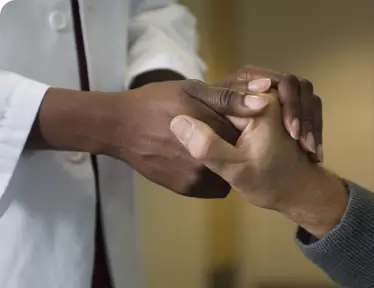



Medical mission brings advanced radiation therapy to fight cervical cancer in Ethiopia
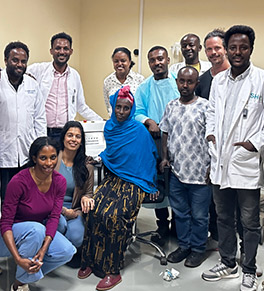
On a typical day, you can find UCI Health radiation oncologist Dr. Priya Mitra treating patients or training residents at the UC Irvine School of Medicine.
Mitra, who specializes in breast and gynecologic cancers, has a particular expertise in brachytherapy, a highly effective procedure for treating cervical cancer using tiny radioactive materials to destroy tumors internally while sparing healthy tissue.
For a week in October 2025, however, the assistant professor of radiation oncology wasn’t meeting with patients, residents or medical students. Instead, she was providing brachytherapy training and treatment in Ethiopia, where cervical cancer ranks as the second most frequent cancer among women.
Illustrating the impact of her work, Mitra talks about visiting a 40-year-old widow at her home in Ethiopia’s eastern city of Jimma.
“She served us tea and bread as she told us her story,” says Mitra. “Her husband was a doctor in the military who died in service, so she’s raising two teenage boys on her own. Then she gets diagnosed with cervical cancer and thinks it’s a death sentence.”
Until now, Ethiopia had only one brachytherapy unit, located at its capital, Addis Ababa. “The waitlist for patients is extremely long, and it’s really unfortunate, because the treatment works,” says Mitra, who helped get a second unit up and running in Jimma on her trip. “This patient, with access to curative treatment, can become a long-term survivor.”
Radiating hope
Mitra had been seeking an opportunity like this for years. As an avid volunteer, she regularly donates her time to domestic violence shelters, but she wanted to apply her medical expertise as well.
“I’ve always wanted to visit a different country to share my knowledge and skills in radiation oncology,” she says. “But I couldn’t find opportunities that matched my skill set, because, in a nutshell, my skills require access to radiation machines, which are not readily available in developing countries.”
Then Mitra learned about Radiating Hope, a nonprofit organization dedicated to expanding access to lifesaving radiation care in developing countries. Founded in 2012 by two radiation oncology residents, it provides much-needed equipment, training and education.
When the Jimma University Oncology Center recently installed a high-dose-rate (HDR) brachytherapy machine, Radiating Hope co-founder Brandon Fisher organized a medical mission to provide training. Fisher invited Mitra to join the team, along with radiation oncologist Chika Nwachukwu, MD, PhD, and brachytherapy medical physicist Daniel Scanderbeg, PhD, from UC San Diego.
“The purpose of the trip was to help jumpstart their brachytherapy program,” says Mitra, calling it “unbelievable” that the new HDR brachytherapy machine was only the second one in a country of 120 million people. “At UCI Health, we have one unit in Orange and another in Irvine. We’re so fortunate.”
She notes that cervical cancer isn’t even among the top 10 cancers for U.S. women. Its high prevalence in developing countries stems from a lack of access to preventative care such as Pap smears and the HPV vaccine.
“Sometimes we forget why we went into medicine,” Mitra says. “Experiences like this remind us not only of how we help people but also of our privilege to do what we do with the resources we have. This was a very humbling reminder of how lucky we are.”
Providing lifesaving treatment
The first two days of Mitra’s mission were spent meeting with the oncology staff, led by medical physicist Abebe Duguma, to learn about the various equipment and operations. They learned, for example, that there’s only one linear accelerator, the machine used for external beam radiation treatment.
“They’re treating up to 100 patients a day on that one linear accelerator,” says Mitra. “Again, we’re very privileged; we have two linacs in Irvine and three in Orange.”
She also recalls losing power every day, sometimes for a few minutes, other times for a couple of hours. But the staff was eager to learn how to use the new brachytherapy machine, leveraging available resources, and they greatly appreciated the support.

“The people were so warm; it’s just a beautiful culture,” says Mitra, recalling the woman who roasted coffee beans each morning. “The whole department enjoys coffee together daily around 10 a.m.”
By day three, the oncology center team was ready to officially launch their new lifesaving treatment option.
“We treated their first brachytherapy patient on Wednesday and everybody started clapping afterwards,” Mitra says. “It was heartwarming, and the patient was super grateful, as was her husband.”
Mitra led that first procedure and then supervised the Jimma team when they treated their second patient.
“We walked them through the process, helping them navigate when things didn’t go as planned,” she says.
“I’m so grateful to have been part of the team, helping to make an impact.”
Making a difference
Mitra is eager to share what she learned with her radiation oncology residents.
“I want to broaden their horizons so they see what the real world is like and don’t take what we have for granted,” she says. “For those interested in giving back, I want them to know there’s a lot that needs to be done in the world, and we can help.”
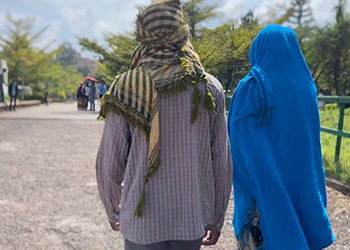
Mitra plans to return to Africa annually, possibly bringing medical students with her, and she hopes to invite clinicians from Jimma to UC Irvine for knowledge-sharing and training opportunities.
She is also collaborating with UCI Health gynecologic oncologist Dr. Anjali Y. Hari who is doing similar work with the Bugando Medical Centre in Tanzania. They are looking to expand Hari’s biannual visits to include radiation oncology.
“There’s so much to be done,” Mitra says. “If we can enlist more help, especially from the UC Irvine community, we can make a difference. Even if my trip was just a drop in the water, hopefully the ripple effect will linger.”
To learn more about this medical mission to Ethiopia, view the first two episodes of a documentary in the works by Radiating Hope co-founder Brandon Fisher: The Motherland and The First Patient.
To get involved, contact Dr. Priya Mitra.