





Colon cancer rates for adults under 50 continue to increase
Colonoscopy screening recommendation lowered to age 45 to catch possible cancers earlier
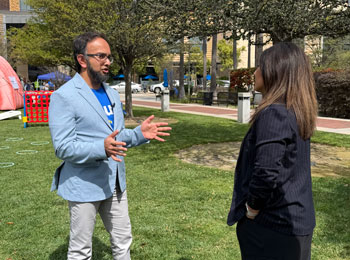
IN THE NEWS: Colorectal cancer rates continue to increase in adults under the age of 50. The American Cancer Society now recommends that all adults 45 and older are screened via a colonoscopy or at-home fecal test. Early detection can lead to less invasive treatment and an improved overall outcome.
 NBC 4 Los Angeles spoke with Dr. Jason Samarasena, a gastroenterologist with UCI Health, to discuss what people need to know about increasing colorectal cancer rates.
“Colon cancer is the leading cause of cancer-related death in individuals under 50 in the U.S. In this age group, the incidence of colon cancer is increasing about 3% every year.”
Samarasena also spoke about how he’s educating his own group of friends about the importance of annual screenings.
“I texted my friends today. I said I love them but that I need them to get screened for colon cancer this year. The responses were kind of humorous. But at the same time, I think my text hit home.”
Samarasena specializes in treating gastrointestinal disorders, including gastroesophageal reflux disease, esophageal disease, pancreatic cysts, biliary tract disorders, gastric intestinal metaplasia and colorectal cancer.
Samarasena is also a professor of clinical medicine and chief of the Division of Gastroenterology & Hepatology at the UC Irvine School of Medicine.
Watch the report
About UCI Health
UCI Health is one of California’s largest academic health systems and the clinical enterprise of the University of California, Irvine. Established on July 1, 1976, UCI Health has grown into a 1,513-bed health system that includes UCI Health — Orange, UCI Health — Irvine, its newest facility, UCI Health — Irvine Rehabilitation Hospital, four Community Network hospitals and a growing network of ambulatory care centers across Orange and Los Angeles counties. As Orange County’s only academic health system, UCI Health is home to the only National Cancer Institute-designated comprehensive cancer center based in the county, the region’s only American College of Surgeons-verified Level I adult and Level II pediatric trauma center, American College of Emergency Physicians Gold Level 1 Geriatric Emergency Department and a nationally recognized regional burn center verified by the American Burn Association. Powered by UC Irvine, UCI Health serves 5.6 million people across Orange County, western Riverside County and southeast Los Angeles County through excellence in patient care, research and medical education. Follow UCI Health on Facebook, Instagram, LinkedIn and X.